
Contents
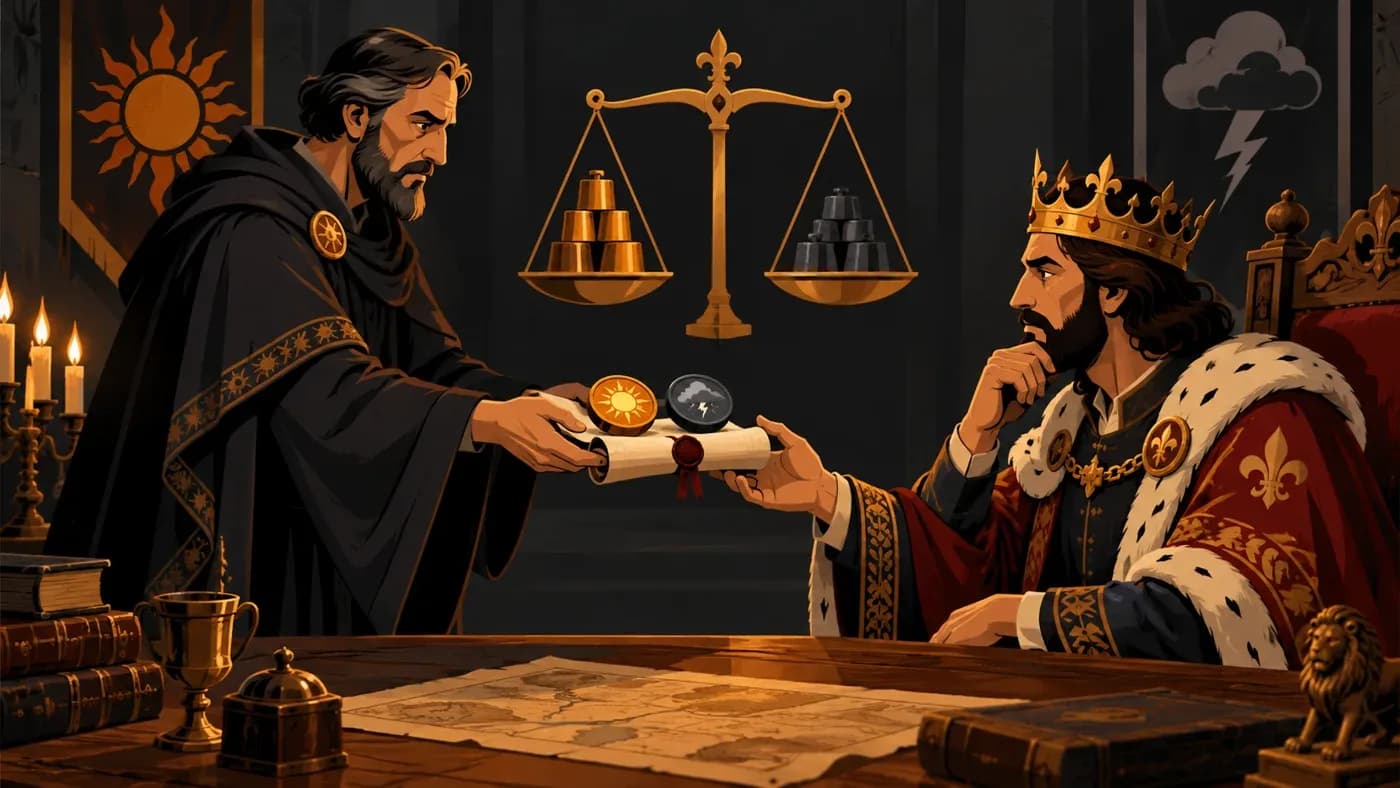
In short: Events introduce a new decision or consequence when a condition is met in a strategy game. Modifiers shape how those consequences affect countries and provinces by separating additive values, factors and on/off rules.
When a harvest is poor, the game should do more than show a message. The country should face a decision, and its outcome should affect the economy. Events create that decision point; modifiers determine how much the decision changes the game world and how long the change lasts.
Why separate an event from a modifier?
It becomes harder to follow game rules when events and bonuses are mixed together. An event's condition, the choices shown to the player, and the result of a choice are different jobs. Likewise, permanently adding every bonus directly to a country's value makes it difficult to see which rule contributed each change over time.
Game content needs a clear way to express this separation. When does an event come up? Which options are available? What happens after a choice? How do bonuses combine, and how are they removed when they expire? Each question needs its own answer.
Events create decision points
An event's condition checks whether a relevant situation has occurred. An event may arrive through the calendar or be started by another result in the game. Some events apply an effect directly; others offer the player options. Once an option is chosen, its associated consequences are applied. If the player does not respond before the choice expires, the event's defined default option takes effect.

Consider a drought. When its conditions are met, the event comes up. The player can choose to preserve grain stocks or take another measure; each option has a different consequence. The event is therefore more than a warning on screen: it connects a player's decision to the game world.
With the same starting seed and the same sequence of commands, the game should produce the same result on different machines. That sequence includes more than player choices: the AI and game systems can also issue commands for later steps. Event timing and their internal random choices are kept separate from random draws made by other systems.
Modifiers shape the outcome
A modifier is an effect attached to a country or province that contributes to game-rule calculations. There are three basic forms of contribution.
- Additive values: Several contributions combine into a total. For example, contributions of +3 and +2 add up to +5.
- Factor contributions: Increases are combined first, then applied to the base value. For example, two separate 10% increases produce a total increase of 20%, rather than being multiplied one after the other into 21%.
- On/off rules: These indicate whether a condition is active. When switched on, the associated rule takes effect; when off, it does not.
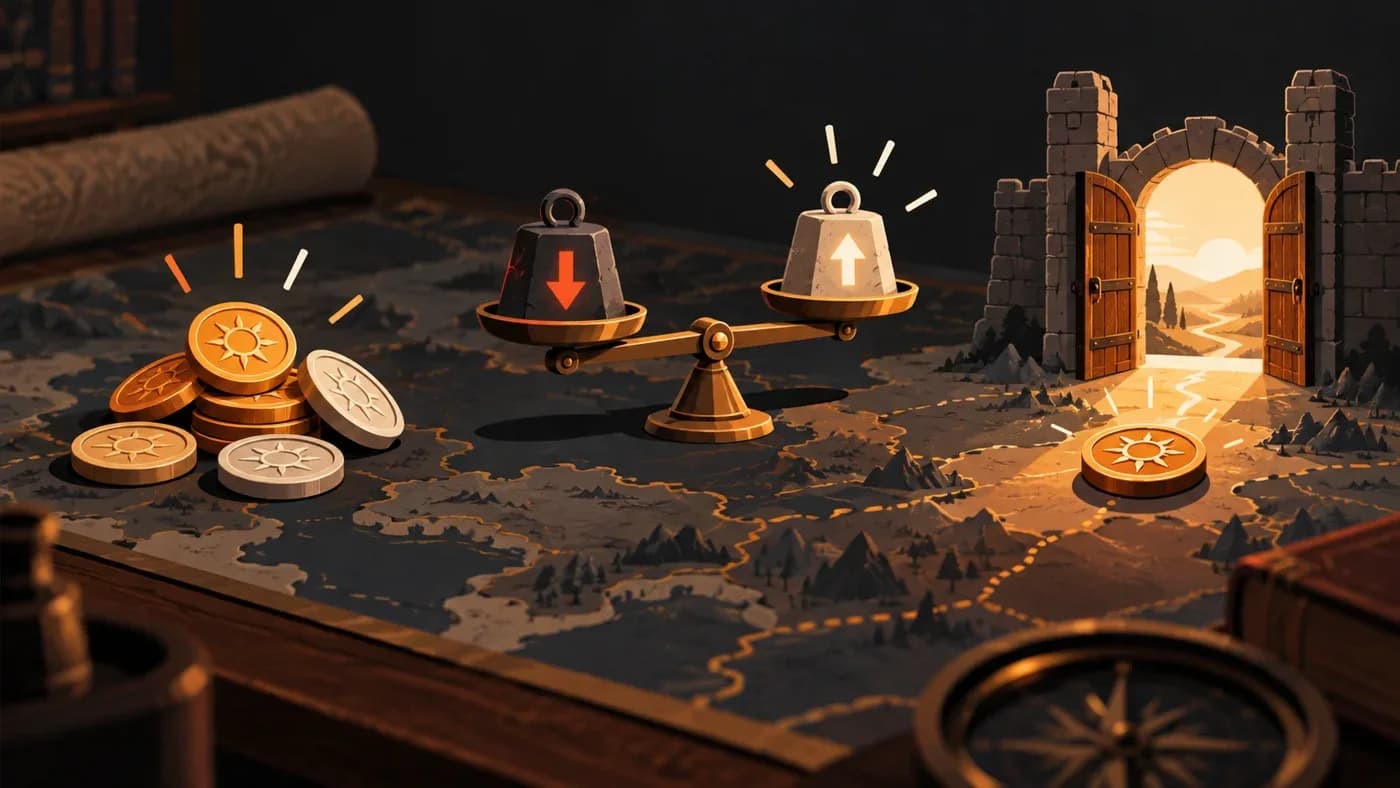
If a modifier is defined as temporary, it disappears automatically when its end time arrives. A permanent modifier continues to contribute unless another game rule changes it. That means a temporary harvest bonus does not become a value the player has to manually take back each day.
Events and modifiers have distinct jobs. Whenever the game advances, events are checked after timers and before the game systems act. Changes made later by the systems are picked up at the next event check. This keeps the order of interaction between player choices and other developments consistent.
How are decisions kept apart from their effects?
This diary does not report a new speed or memory measurement. What we verified is the separation of behavior: events produce a conditional result or a choice; modifiers contribute to rule calculations as additive values, factors or on/off rules. Temporary modifiers expire at their defined end, and the same starting seed and command sequence produce the same result.
The +3, +2 and 10% values above are arithmetic examples to explain additive behavior; they are not game settings or measurement results.
Keeping player choices distinct from their effects
Separating an event, its options, and their effects makes the consequences of a decision easier to understand. Keeping changes as separate contributions instead of overwriting a value directly also preserves which rules contributed to that value. Connecting the end of temporary contributions to the flow of the game removes the need to manually restore the old value when time runs out.
The boundary between sums and multipliers
The game designer must define consistent conditions, options and consequences for every event. Contributions of the factor type are added together rather than multiplied one after another, so designers need to choose their values with that rule in mind. Performance impact was not measured in this diary.
Moving on to faster number calculations
We have seen how events and modifiers work. Next, we will look at how MKA Engine’s number calculations were sped up, what separate operation measurements show, and what a late-game simulation cannot establish about a complete game.
Frequently asked questions
Does every event offer a choice to the player?
No. Some events apply a result directly; others wait for the player's decision.
What happens if the player does not choose in time?
When an open choice expires, the default option defined for that event is applied.
How do modifiers combine?
Depending on their defined type, contributions are added together, added to a factor, or turn a rule on or off.
Must a game designer remove a temporary modifier?
No. When an end time is defined, the game flow removes the modifier once its time expires.
Sources
- MKA Engine scripting-language and mod-reference documentation.
- The MKA Engine determinism guide states that the same seed and command sequence produce the same game across machines; the AI and game systems can also issue commands for later steps.
- This diary includes no performance measurement or cross-game comparison.
For more, see MKA Engine, developer diaries, and contact.
Sources and related docs
You may also like
- How is a strategy game's world map made?
For MKA Engine we built a 27,357-location world map of 1337 from real data: how terrain, rivers, straits, population and location borders were made.
- The road to a game engine
How we started MKA Engine: reading four games, treating determinism as law, moving phase by phase with measurements, and where we are now.